 Skip to content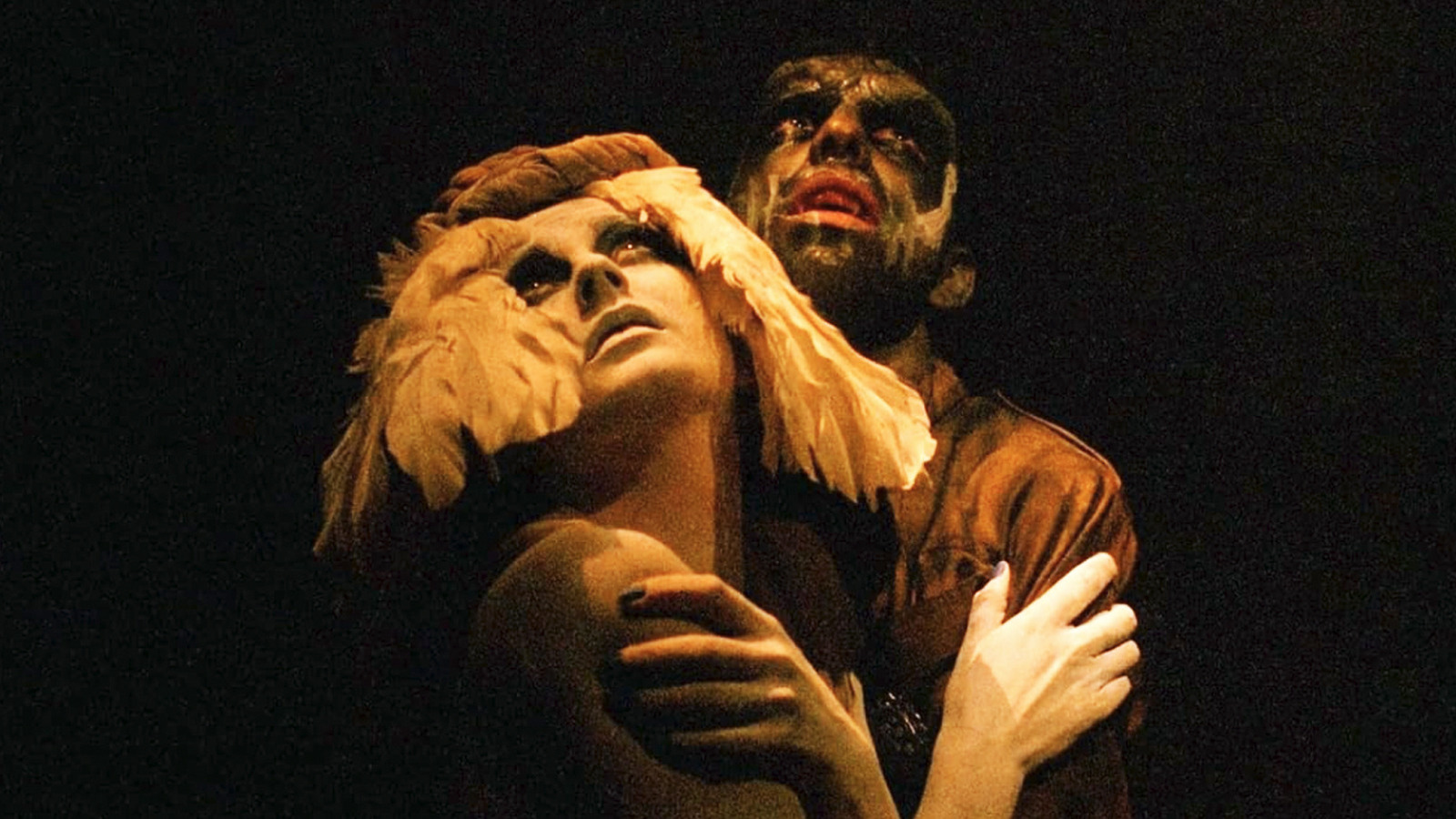
In the VHS edition of Clive Barker’s “Nightbreed,” the director appears in a preface explaining why the monsters that are the protagonists of his work have always appealed to him. “I’ve always liked monsters,” he said. “I think there’s a part of us all that envies their powers, wants to live forever, fly, or change shape at will.” And indeed, Barker succeeded. The reason we keep watching monster movies is because while we may be repulsed by the aggressive savagery of the creatures, there’s a liberating quality to watching them at work. A monster can only be a monster. So how about feeling a little more comfortable in the face of monsters? Barker said they were “repulsive and fascinating.” These are opposites, but both are true.
Like Barker, I have always loved monsters, both repulsive and fascinating. Monsters are the regular stars of every human story dating back to the earliest days of humanity. And throughout the history of the medium, filmmakers have continued to passionately invent creatures, mutants, aliens, and other imaginary spirits, and then surprise us with their visual realizations. Who doesn’t love giant animals with dripping fangs, radioactive gorilla whales, shameless zombies, humanoid killers with claws, and some kind of crazy chimera hungry for human brains? These are our friends.
While we may all remember creature features like “King Kong,” “Godzilla,” and “Alien” (all of which make our list of the 15 best monster movies of all time), some of us may not remember the following titles: /Film presents five forgotten monster movies that still stand the test of time.
Tingler (1959)
William Castle may be one of America’s greatest filmmakers, but he is rarely praised as such. During the early years of his career, Castle was little more than a hard-working Hollywood journeyman who directed over 40 one-off films between 1939 and 1956, mostly westerns and adventure films. But in 1958, he directed and produced “Macabre,” a quirky horror film that was the first to utilize the in-theater gimmicks that made Castle famous.
His 1959 film “The Tingler” is probably Castle’s best film. Because this movie has a very strange premise and features some very unusual monsters. Vincent Price plays a pathologist who discovers that centipede-like parasites spontaneously appear in humans’ spines when they experience extreme fear. He nicknamed the parasite Tingler because it was a spine-tingling parasite. But when you scream, the fear disappears and the parasite shrinks. This leads Price’s character to conduct strange experiments in an attempt to capture the Tingler outside of the human body. A deaf woman (Judith Evelyn) may be the key to his experiment.
Naturally, at the end of the film, the Tingler is extracted from a human spine and rampages through the very theater where the audience was sitting!
“The Tingler” was presented with a gimmick called Percepto!, which caused random seats in the theater to vibrate during key moments in the film. The climax of the film is when the Tingler is released and Price directly pleads with the audience to “Shout! Shout!” “The Tingler” is a prime example of the communal nature of fear. To get the full effect, you’ll need to see it in a theater with other rowdy people.
Razorback (1984)
Those seeking great exploitation cinema will find that Australian genre films have a very special, indescribable quality. i don’t know what People who like shlock really like it. I recommend you check out the fantastic documentary called “Not Quite Hollywood” which traces the rise of ozploitation films during the Australian New Wave era of the 1970s and 1980s. The “Mad Max” movies emerged from this movement, as did classic films such as “Dead-End Drive-In” and “Turkey Shoot,” both directed by Brian Trenchard-Smith.
It was that doc that first brought to light (to me) Russell Mulcahy’s creature feature film “Razorback,” one of the greatest animal attack movies of its era. The film begins with a man named Jake (Bill Kerr), who, while taking care of his grandson, witnesses a wild boar breaking into his home and kidnapping his baby. That boar will make everyone’s life hell.
Two years later, the pesky wild boar is still running amok, attacking and eating locals who travel into the wild. Additionally, wild boars seem to have a tendency to give wild boar commands to other smaller attacking pigs. Jake teams up with a man named Carl (Gregory Harrison), whose wife was eaten by a wild boar, and goes on a hunting trip. The movie ultimately culminates in a confrontation between Carl and the boar in a factory. Boars are large, scary, supernatural-looking monsters that are gross and terrifying.
Two years after “Razorback,” Mulcahy had a cult hit with “Highlander,” a film that spawned many sequels and several television shows. Mulcahy seems to know what the audience wants to see. He certainly used the charming and strange “Razorback”.
Nightbreed (1990)
Renowned horror writer Clive Barker has directed only three feature films in his career to date: 1987’s ‘Hellraiser’, 1990’s ‘Nightbreed’, and 1995’s ‘Lord of Illusions’. We’ve ranked all nine features based on Clive Barker’s stories, including his directing efforts. Because we love that man.
“Nightbreed,” Barker’s second directorial effort, is his biggest and most ambitious, with a mythology so expansive and fantastical that it feels like it could be expanded into an entire film series. “Nightbreed” eventually spawned a comic book, a video game, and a notable extended Blu-ray cut, but it never became as big as it should have.
This is a shame, because “Nightbreed” is equally terrifying and comforting. Like “The Addams Family,” this film happily celebrates being an outsider and reveling in the fact that mutants and monsters play by their own rules. The main character of ‘Nightbreed’ is Boone (Craig Schaeffer), a man who has nightmares about monsters and murder. He dreams of a place called Midian, an underground city where monsters live.
He eventually discovers Midian in real life and discovers that he is one of the city’s monstrous inhabitants, the Nightbreed. They eventually drag him into society, much to the horror of his girlfriend Laurie (Anne Bobbie), who goes looking for him. David Cronenberg plays Dr. Decker, Boone’s psychiatrist who acts as a masked serial killer. The movie ends with a monster vs. police shootout and lots of cool makeup effects. Danny Elfman’s score is top-notch.
The film closes with the setup for “Nightbreed 2,” which has Boone leading the monsters to their new home, but unfortunately Barker’s film bombed upon release and only found its audience on home video in the years that followed.
Relics (1997)
I think Peter Hyams’ 1997 creature feature film “The Relic” contains one of the coolest monsters of the decade. Much of the film’s action takes place at the Chicago Museum of Natural History, where an ailing institution (headed by Linda Hunt) is hoping to attract funding through an exhibition on superstitions. One of the exhibits is a statue of a mythical forest creature called Kothoga, recently shipped from the South American jungle. Penelope Ann Miller plays a hard-working and angry evolutionary biologist, and Tom Sizemore plays a local cop investigating a series of strange murders. It appears that someone or something is drilling a hole in the human skull and tearing out the hypothalamic gland.
Oh, and there’s a monster hiding there. whacker. Something mean. A monster with the body of a giant lion, large radial claws, and claws on a face like a stag beetle. It’s a pretty bad monster.
This creature was designed by movie monster creator Stan Winston, who created another amazing beast for his huge zoo here. Winston worked on creatures for hits such as “Aliens,” “The Thing,” “Predator,” “Jurassic Park,” and more. Stan Winston was the only person Steven Spielberg trusted to bring his dinosaurs to life, and he fully earned that trust. When Winston died in 2008, monster fans around the world mourned.
In my eyes, Kogotha is one of Winston’s funniest monsters, but “The Relic” is not a masterpiece by any stretch of the imagination. It’s a wacky B-movie about a brain-eating super monster running amok in a museum. It’s slick and expertly made, but ultimately it’s just shadowy monster fun. I dig it and maybe you will too.
Trollhunters (2010)
Director André Øvredal most recently directed “Passenger,” a haunted road trip film filled with jump scares and clumsy mythology. But Øvredal proved he could make an exciting and frightening horror film with the 2010 release of “Trollhunter,” which was made in his native Norway. ‘Trollhunters’ is a low-budget mockumentary that tells the story of filmmakers trying to track down Hans (Otto Jespersen), a grumpy old man suspected of being a freelance bear hunter. It turned out that he was a trollhunter. Hans reveals that trolls are very real and that the Norwegian government has hired freelance hunters to stop them.
Trolls turn to stone when exposed to sunlight, and if left uncontrolled (hehe) can do quite a bit to local infrastructure. Rather unusually, trolls can smell Christian blood, so it is very important that troll hunters are atheists. Later in the film, the documentarians call in a new helper, and it’s unknown whether the fact that this person is Muslim will activate the trolls’ murderous instincts.
Øvredal does an incredible job of blending the terrifying immediacy of found footage with an absurd, comedic premise. Troll Hunter is scary, but you’ll laugh a lot. The troll’s design is classic and reminiscent of the work of Brian Froud, concept artist for fantasy films such as “The Dark Crystal” and “Labyrinth.” This film swept the American art film world and caught the attention of horror fans. Word spread, took root, and is now widely available to the curious. You can rent it online.