 Skip to content
 I’ve only been in Busan for a few days, which was plenty of time to relieve jet lag, try a few delicious food trucks outside the festival’s cinema, and snag a few films from the festival’s vaunted competition. Although directed by men, Dispatch’s three films are all female-centered, exploring the weight of loss, denial, and the path not taken in the protagonists’ lives. Two films feature three generations of women with touching stories, while the other features a bizarre Korean horror film. They all deliver lively performances to varying degrees.
From writer-director Shuichi Okita, who is often surprising and deeply entertaining, “always in stock” chronicles the emotional lives of three aspiring female writers named Satoko, who face the obstacles that stand between them and their novelistic passions. Writing is a calling deep within their souls, even when life tells them to focus on perhaps more relevant matters.
The youngest, Nakai (Kashun Himeno), is a third-year student who has to visit the local clinic to buy a nebulizer due to rhinitis. It sparks wistful daydreams about whether the boy she was crushing on could go there and live together. But her journey as a writer does not begin with him. It begins with a strict teacher being impressed by Nakai’s made-up report on his recent trip to see Kabuki. Nakai was sleeping during the performance, and the report turned out to be more outrageous than that of her classmates. Nakai, eager to impress her teacher, was given assigned writing prompts to “write a will” and “write a love letter” to create a fantastic piece about her favorite salty squid snack and was inspired by her father’s athlete’s foot.
If that section is the most fascinating, the third chapter, about television marketing executive Nishida (Kasumi Arimura), is even more sobering. She resumes her ambitions as a writer when her wife’s stabbing by a jealous lover lands her in the hospital and gives Nishida the opportunity to write about their relationship. We see their easy romance through several scenes by Pen Nishida, which ultimately brings us to the film’s final act, which features the older Iijima (Hikari Ishida), an soon-to-be empty-nest housewife who feels underappreciated by her husband and three sons. Inspired by her first casual encounter with her husband, she envisions a work about a bird visiting a bookstore.
Each naturally presented section resonates by simply depicting the joy that writing brings to these three characters who never thought fame would come to them. They see media only as a therapeutic tool to process the world around them. Cinematographer Kiko Ashizawa’s captivating photography heightens purity, varying saturation and grading depending on the wishes felt in a particular scene. And while “Satoko Always” sometimes unwinds in a way that feels like it’s doing everything, its sense of unplannedness is matched by the sense of adventure needed to produce something special. The film itself accomplishes that feat.
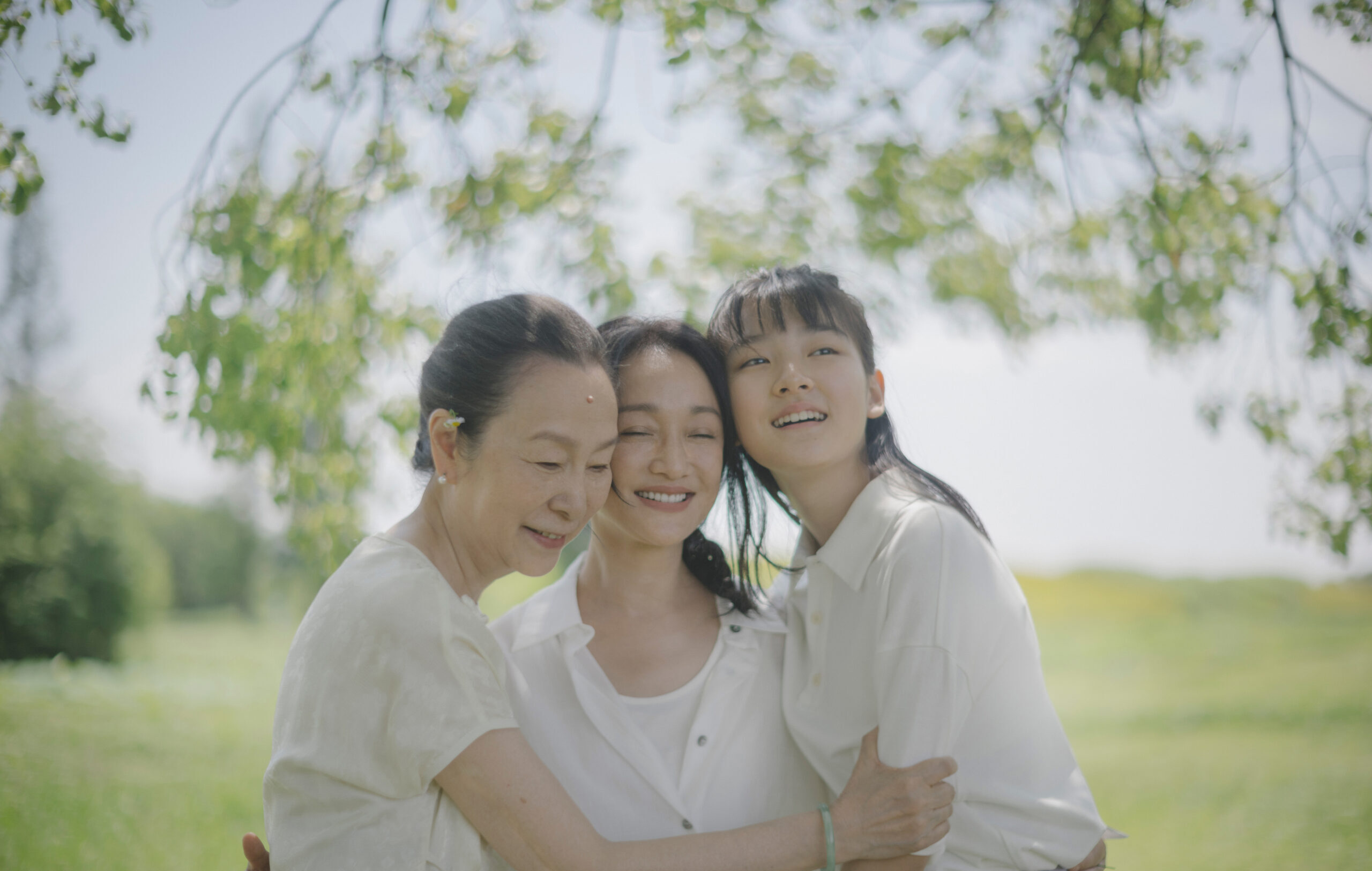
Another film based on three women is the overwhelming melodrama of The Manger.first taste of loneliness.” This work is the final work of the ‘Landscape Trilogy’, a classic ink painting style that inspired Gu’s two other films, ‘Fuchun Mountain Residence’ and ‘West Lake Residence’. His latest work tells the story of a grandmother named Luna (Xi Meijuan), her daughter and single mother Jiang Yue (Xi Meijuan), and her teenage granddaughter Moon (Wang Shengdi) as they mourn the death of Luna’s husband after a two-year battle with cancer. If you haven’t connected the dots by now, all three women have names directly inspired by the moon, and they decline through mourning as they contemplate how to move forward after a monumental loss.
A big change comes for Luna a few months later when she begins dating widower Mr. Xu (Xu Chaoying). Their loving relationship requires everyone to consider Luan’s emotional needs and their own future. President Moon is about to take exams and graduate. Her mother, Ms. Zhang, quit her job as a fashion director in Beijing to care for her father and is considering returning to work. Of the three, Jiang is the most cautious. Are they continuing to betray their father’s memory? His spirit still visits all of their dreams except hers. Is it because she knows that tormenting her will only make it harder for Jiang to analyze her grief?
True to the film’s artistic roots, Ku and his cinematographer Mikiya Takimoto visualize their shared heartache through soft panoramic pans and drone shots that seem to fall majestically from the sky toward their melancholy subjects. Is this the ghost of the chieftain who visits them as he traverses the concrete landscape and rolling hills? Is it he who animates the misty flashback sequence in which he and Luna discuss naming their potential daughter as they wander through a soul-stirring forest path? Gu and his editor, Liu Xinzhu, do not jump to conclusions. They painstakingly crafted the film to create these depressing scenes and accurately depict the long path to mourning. As a result <첫 고독의 맛>may leave a bittersweet feeling, but this epic tale of the mental strength of three women naturally emerges from that bitterness.
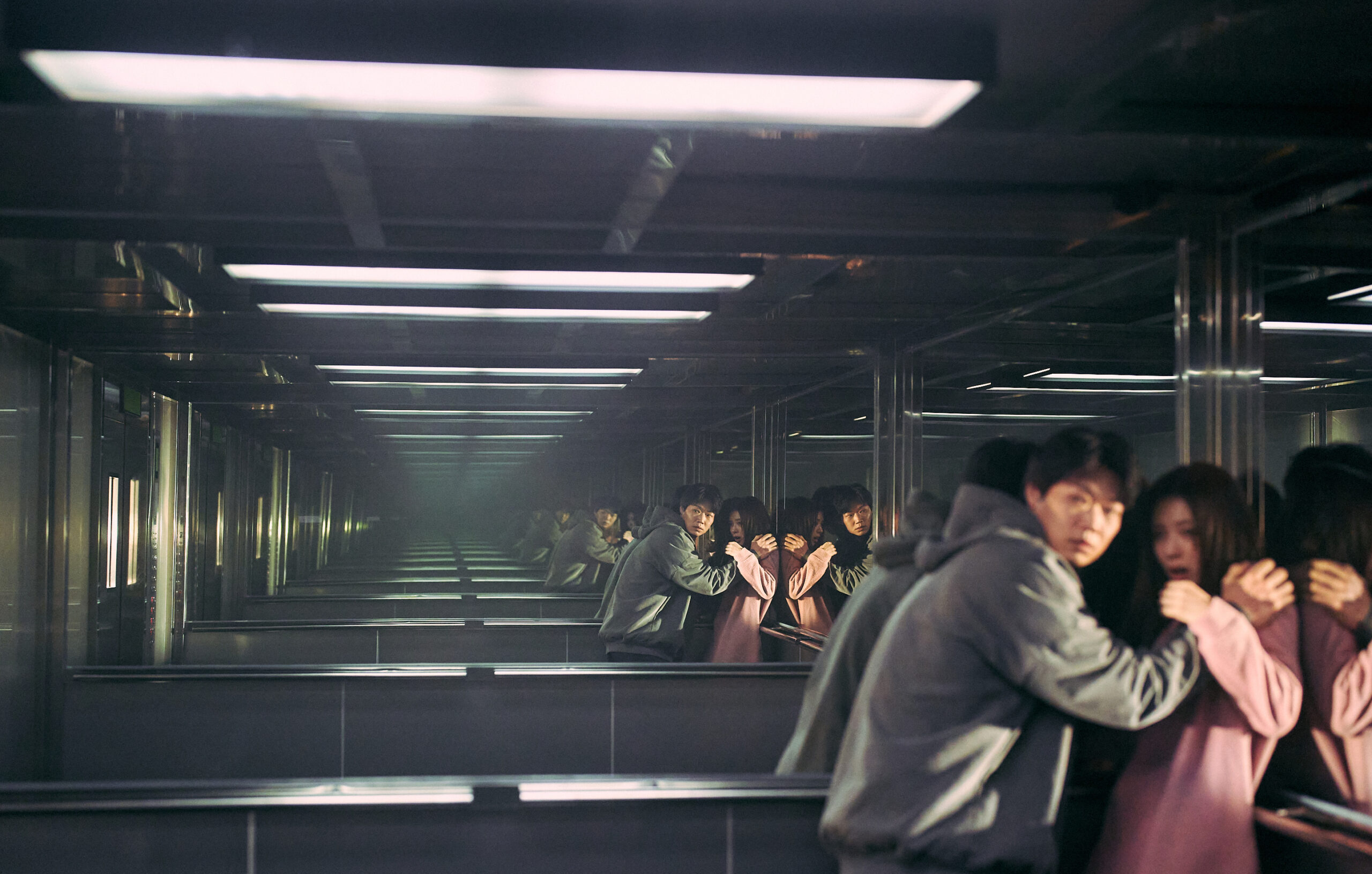
Cartoon and mechanical psychological Korean horror film “shavingThe script, written by Hong Seong-yoon and Noh Do-hyun, who broadly interpreted ‘The Shining’, tells the story of Soo-yeon (Roh Jeong-eui), an anxious horror novelist, and her boyfriend of nearly two years, Shinji (Sho Kasamatsu), who seems lovely at first. This is where Soo-yeon’s deceased father hopes to finish her first novel following the death of her tyrannical boyfriend and co-writer Hyun-woo (Byun Yo-han).
The squiggly ambidextrous begins to drift away from Kim when Shinji shaves his face with an old, rusty razor blade of unknown origin after Su-yeon complains that his beard is too long to be combed. Clearly, he has hurt her, and Su-yeon, who has not taken psychiatric medication and has not seen a therapist for quite some time, begins having nightmares of a man with a black tattoo below his left ear whistling discordant sounds. She struggles to sleep, and the friendly Shinji slowly becomes verbally abusive as her scrapes seem to become more and more infected as the night progresses. Is his decline caused by some kind of female madness, or is she really in danger?
“Saving” uses familiar narrative mechanics to create an unoriginal sense of dread. That painful simplicity is intentional. Soo-yeon has to write the ending to her novel (she often struggles to come to a conclusion), and she often calls herself out when her writing drifts into cliche. Because her nightmares reflect the book she is writing, the novel draws out her buried traumas and memories. It’s only natural that they follow the genre beats of the horror films she’s working on. Unfortunately, the film lacks the knack of elevating this meta commentary into valuable observations about gaslighting, abusive relationships, and mental health.
As a result, ‘Shave’ is a dull bore that relies on several false endings to provide Soo-yeon with writerly catharsis. The computer graphics are vulgar, and even when the film achieves practical effects, it’s too horribly cumbersome to inspire horror. Mr. Noh seems to drift from a character so psychologically and emotionally trapped when he should be much more unstable. There are demonic entities in the show, but the movie doesn’t fully explore Shinji’s position as the Other (he’s a Japanese man dating a Korean woman). The lack of interrogation is a reminder that every cut on “Shaving” barely scratches the surface.