 Skip to content
There’s nothing quite like the evocative, ephemeral, almost unconscious way that music evokes memory — or the strange emotional distance it can travel in an instant. A melody, certain notes, a certain sound can evoke something nostalgic, fun, happy, embarrassing, painful, or sad—sometimes several of those things at once. That sense of multiplicity, and the way musical memory often returns to family, seems to be territory of shame, longing, old wounds, and moments we felt we’d left behind. Tony Gilroy explores in “Behemoth!,” his layered, thoughtful and remarkably unique new film.
Read more: 2026 New York Film Festival preview: 21 must-see films
“Behemoth!” What is handed down is what comes to mind: talent, expectation, obligation, resentment and so on. Pedro Pascal He plays Alex Cerian, a renowned cellist and former child prodigy born into an extraordinary Los Angeles musical family. His mother was an accomplished harpist, his late father was a noted composer and musician, and his brother also pursued music. Alex, meanwhile, has spent decades moving through the rarefied world of first-rate orchestral players, bouncing between Dallas, Boston, Chicago and elsewhere, never settling long enough to fully settle.
especially after “Andor“The film initially provides a kind of inspiration, Wait, what exactly is this? feeling Gilroy has spent much of his career writing about hyper-competent people navigating systems, crises, organizations and conspiracies, and this intimate, slippery, emotionally fragile drama registers as a major left turn. However, his fascination with the sublime has not disappeared; It just changed direction. Alex is exceptional at what he does, but “Behemoth!” It cares less about what mastery can achieve than what it might cost a lifetime built around it.
Alex returns to Los Angeles to pick up the pieces of a broken life, even as the film gradually suggests that the legacy of music, excellence, and extraordinary talent that gave that life meaning can make it difficult to maintain normal intimacy. Music is his organizing principle, but it also gives him a reason to move.
Pascal is subtly brilliant, quietly never playing Alex as a sad sack of family baggage, heartache, anxiety and unresolved issues. He is friendly, funny, cultured and generous with younger musicians, especially those still finding their footing. For someone who has been extraordinary throughout his life, Alex has a surprisingly low visible ego. He doesn’t bot show or turn skill into personality. He simply plays and lets the music speak for him.
That modesty complicates everything else. Alex has the easy magnetism of a classic screen lothario, but without much swagger or vanity. He is essentially a nomad, moving from orchestra to orchestra, city to city, relationship to relationship, rarely staying anywhere to take hold of eternity—or perhaps to fully witness the emotional wreckage he leaves behind. His temptation feels almost casual. Restlessness is a deep pattern.
In Chicago, Olivia Wilde Meals are served by Carol, a wealthy patron whose relationship with Alex turns explosive, giving the film its tough, funny, very different personality. Elsewhere behind him, Eva Victor Nadia plays another musician he becomes involved with. Alex gravitates toward relationships with built-in exits, but the people on the other side are more available than he’s ready for.
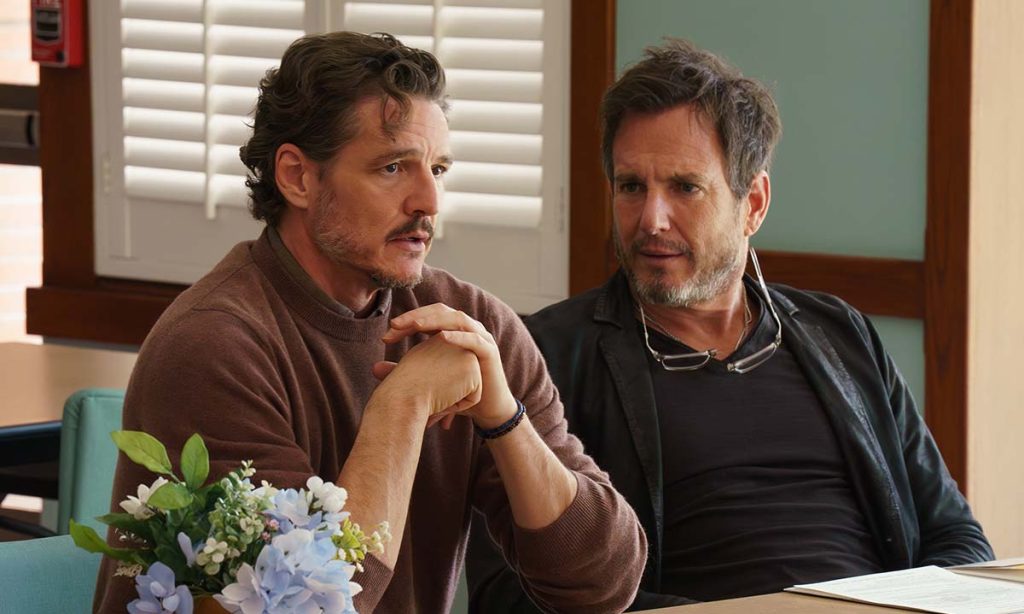
Returning to Los Angeles after nearly 20 years, he is home less than the end of a long self-imposed exile. His mother is dying and his relationship with his brother is played out Will ArnettOld resentments, sibling rivalry and entanglement in affection. Arnett is particularly good at sitting in a relaxed, almost chill-guy pocket, but letting decades of annoyance and frustration simmer beneath.
Gilroy turns none of this into a mental record. “Behemoth!” Alex tells about behavior, relationships and guess what people remember about him. The film itself works like a puzzle Alex doesn’t yet know he’s solving, withholding explanations seemingly disconnected and slowly gathering meaning.
That slippage is essential. For stretches, the audience drifts along a bit with Alex. “Behemoth!” It doesn’t reveal what kind of story it will become, and its final mystery element almost sneaks aside. Uncertainty becomes part of the experience: seeing life slowly comes into focus.
Music carries the film through Alex’s memories. “Behemoth!” Ellipses through his past, surfing from one memory to another as performances and scoring sessions unlock different periods in his life. A cue doesn’t just announce a flashback; It’s like pulling Alex somewhere emotionally, a song that can suddenly pull you from one moment to something more internal, personal and sometimes fraught.
Despite the film’s cargo of regret, death and missed connection, it’s still quite joyous – the musical world within it, notably. “Behemoth!” Understands the joy of watching talented musicians work together, hearing an orchestra suddenly come alive, watching one player respond instinctively to another. Music isn’t Alex’s only outlet for painful memories. It is his refuge and the place where he is fully alive.
That joy gives the film a romantic quality in its portrait of Los Angeles and the session players who move through it, gigging from job to job and trying to make a living inside the same strange dream factory as everyone else in Hollywood. They are artisans who work, but they are also part of what makes movies magical. Gilroy’s affection for that world feels personal, wistful, as he imaginatively inhabits the lives of people with the musical chops he once wished for himself.
The film is not a comedy, but it has a whimsical, light-on-its-feet quality that keeps its melancholy from becoming worrisome. Music can bend an ordinary moment toward the heightened language of movies, making the mundane suddenly romantic, suspenseful, overwhelming or absurdly funny, and Gilroy takes immense pleasure in that idea.
The best example comes during a furtive mission Alex undertakes while a monstrous spy-movie score swells around him. His relatively ordinary scheming suddenly plays like a full-blown cinematic caper, genuinely tense and hilariously huge all at once. The fictional film Alex works on is titled “Behemoth!” becomes part of a meta joke whose music spills over into Alex’s own life. It’s a blast, revealing the trick while celebrating exactly what film music does: embellish reality until life feels more romantic, dangerous, or magical than it really is.

The death of someone from Alex’s past finally pulls a thread that the film has quietly laid from the beginning. At the same time, he becomes fascinated by an elusive teenage musical prodigy whose recordings briefly appear online and disappear. Something resembling a mystery takes shape, and Alex—who has spent much of the film as a passenger in his own life—finally begins to search with purpose.
To say more risks spoiling the film’s most satisfying emotional twist. Family history, failed relationships, musical inheritance, Alex’s father’s tendency towards younger musicians and his fascination with this mysterious composer gradually converge in an unexpectedly cathartic way.
Underneath all his wandering lies an overwhelming longing – for stability, meaning, some sense of belonging and emotional resolution. “Behemoth!” Reconciliation does not always mean repair and understanding that connection does not necessarily require possession. Some conversations come late. Sometimes recognition is enough.
That restraint lends its power to the final movement. Pascal never pushes, and the film never suddenly creates an emotion that isn’t there already. Alex’s gift was always expressing what he couldn’t, and music ultimately offered a form of communion language that never could. What he finds doesn’t magically fix his life, but it allows him to identify something missing from it.
Support independent film journalism. Sign up for the Playlist newsletter for the latest movie and TV news, reviews, interviews and more—free.
“Behemoth!” There are some clear references to Within Gilroy’s career. “Duality” probably comes closest in its adult sophistication, sly humor and light touch, but it also gets part of the way. “Behemoth!” Looser, more romantic, more vulnerable, and more creatively funny—at times closer to the bittersweet drift of ’70s adult film than the precise machinery usually associated with its filmmakers.
That may be a very personal impression. “Behemoth!” Without sacrificing his wit or craft reveals a more intimate Gilroy, understanding how music can hold joy, shame, love, regret and longing. The film spends most of its running time quietly collecting those memories. When they finally come together, they strike with the force of a graceful, moving, beautifully orchestrated crescendo. [B+]
Follow along for all our coverage of the 64th New York Film Festival.
