 Skip to content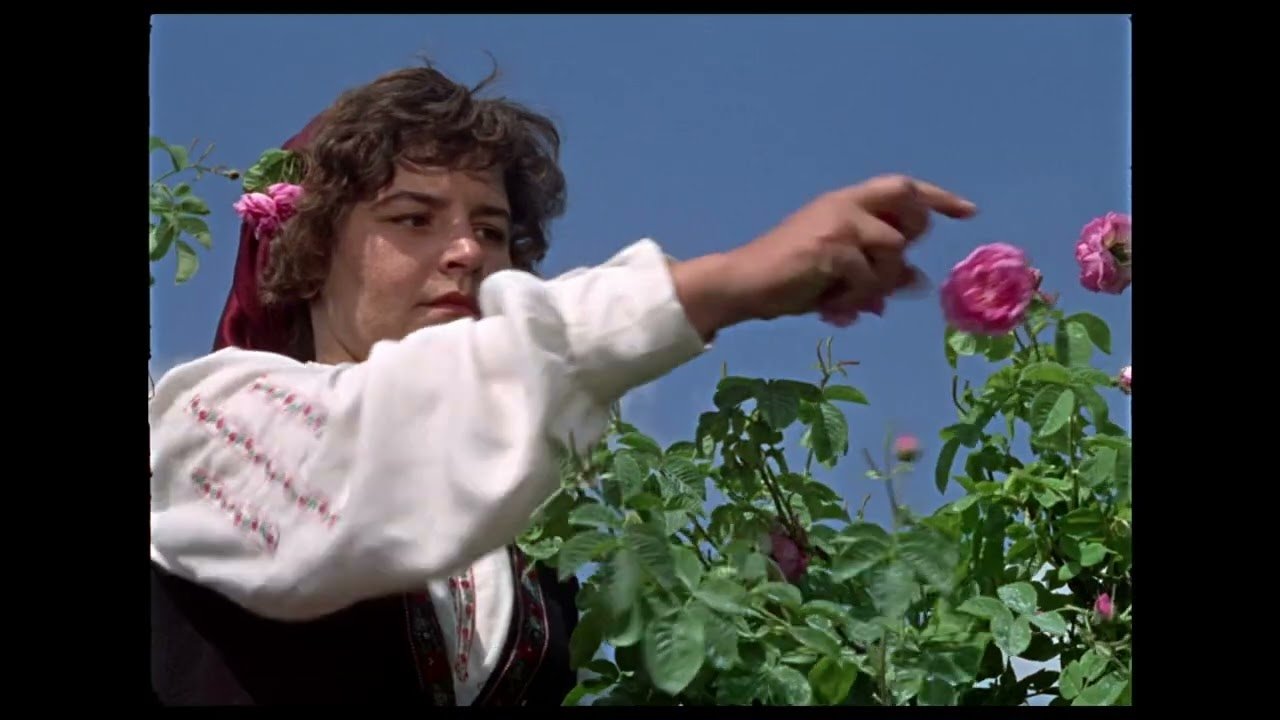
Rayna Teneva grew up in Kazanluk, a Bulgarian city famous for its weapons factory Arsenal AD and its rose oil made from flowers harvested from Bulgaria’s “Rose Valley”. The artist and filmmaker, who currently lives in Vienna, doesn’t find her work surprising. Geography is destiny (International Premiere of the Doclisboa International Competition) is often described as being about “guns and roses”.
Still, she hopes audiences will move beyond these obvious clichés.
Teneva returned to her hometown to make movies. She spent her time picking roses and also got a job at an arms factory. “We have basically no inside access,” she says of the large arms manufacturer, which sells every kind of munitions, weapons and explosives imaginable (and is famous for making Kalashnikov rifles). She began filming in 2021 and returned several times. The last time she was filmed was in December 2025.
She emphasizes that her film is not about exposing the weapons industry. She describes it as an exercise in psychogeography. The title is taken from a line by Ibn Khaldun, a famous Arab-Tunisian scholar of the Middle Ages. He argued that landscapes have a huge impact on how societies evolve, how their inhabitants behave, and where power lies.
She acknowledges that “fear is a very big part of the social fabric here, with this arms factory being one of the biggest employers in the country.” People who work there don’t talk about their jobs or say anything that could cause trouble. She didn’t want to put anyone at risk by taking the camera to the factory floor.
Her job was drilling aluminum pipes. “I was basically working on a hole-making machine.” The machine made “very strange noises” and she was surprised “by how much manual work it took.” And no, it was not a pleasant work experience. “I was full of fear, anxiety and stress. And the pay was very low because I couldn’t work there for long.”
The film, which was also shown in the Bulgarian pavilion at this year’s Venice Biennale, does not show her working on the factory floor. “To me, recreating the image wouldn’t be artistically interesting.”
Although there are state-of-the-art surveillance cameras installed at the top of the tower, the factory is in a strangely ramshackle condition. Teneva is shown wandering the mossy, lush grounds with Mike Boom.
At one stage, Teneva is seen practicing with a gun at a shooting range. (Her boyfriend filmed her.) “I knew there would be no footage coming out of the factory,” she says, explaining why she chose to include this sequence. In the factory, workers are always tinkering with parts for the weapons they’re making, but in this scene she’s shooting an actual gun. The process was “very physical, somehow very unpleasant, and very noisy.” The shooting injured her shoulder. She hit the target, but the instructor said, “Everyone hits a 10 the first time because you focus. The second, third and fourth time you’re less accurate.”
The impetus for the film came around 2018 when she read several articles about how there was no unemployment in her hometown. “That completely contradicts what I remember from when I lived there in the early 2000s, when people wouldn’t get paid for three, four, five months.”
The arms factory was fully privatized in 2012. “Of course, we started producing a lot and exporting a lot, and in 10 years, our profits increased tenfold.” However, this does not mean that the salary has improved. She says workers are still not adequately compensated.
When you ask the director about her childhood in Kazanlak, she admits: “I always wanted to leave. I don’t know why. I have a lot of very conflicting feelings about this place. Guns and Roses reflect the way I feel about this place.”
Teneva was born in 1986. She grew up at a time when former Soviet countries were trying to transition to liberal, capitalist democracy. She talks about her “anger and disappointment” at how this process ended up going. “Maybe this is why I wanted to run away and go to a better place!” She first moved to Sofia, then to Germany, and eventually ended up in Austria.
Returning to Kazanlak to make the film was “very nostalgic.” She left her child in daycare, rented an apartment, and immersed herself in the daily life of the village. “I decided to make this trip again. It’s a serious move. I haven’t been there in 20 years.” Some of her family members appear on camera. We see the aunt working at a weapons factory baking cakes for workers celebrating birthdays.
It was a film that was not easy to finance. The director points out that she comes from an ‘art’ rather than traditional film world and does not have extensive contacts with the industry.
“We started very small and were a little afraid to scale up,” the director says of the film, which he produced with Sophia Schiller and was produced through the German company Filmwerk Kalliope in association with Bureau Artrecord. Her partner was DOP. She has received partial funding from the Bulgarian Ministry of Culture, the Bulgarian Women’s Fund, the Austrian Ministry of Culture, Studio29 and the Singer-Zahariev Foundation.
“I’m really happy that I can now go to Lisbon with the film,” Teneva says of her selection at Doclisboa.
The director is now working on a new project, one he and his colleagues describe as a kind of ‘road movie’, albeit set on a train. “We travel by train from Vienna to Bulgaria and back to Vienna.”
The further east you go, she suggests, the slower the train goes and the journey becomes more and more dreamlike. “We already did one full research trip last year,” she volunteered. The goal now is to secure funding to continue production on the film.