 Skip to content
Yûta Shimotsu’s (best wishes to everyone) new group The metaphor of Japanese society’s conformity and erasure of individuality is as subtle as a sledgehammer.
But subtlety isn’t really the point. What the film lacks in nuance, it more than makes up for in sheer boldness and the way it implements these ideas in increasingly gruesome ways.
new group It begins with a mysterious signal being transmitted from space toward Earth, leading us to one of anime’s most enduring tropes: the arrival of a mysterious high school transfer student. Kobayashi (Yuzu Aoki) returns to Japan after living abroad for several years in New York and is taking classes with a timid child (Anna Yamada). Unlike his new classmates, Kobayashi has no qualms about marching to the beat of his own drum, while Ai is caught between his desire to think for himself and his fear of attracting the attention of the class bully.
See, there’s an old Japanese proverb that sums up the film’s central thesis in a nutshell: deru kui wa utareru, or “The nail that sticks out gets hammered down.” new group They take that idea and take it to truly ridiculous extremes.
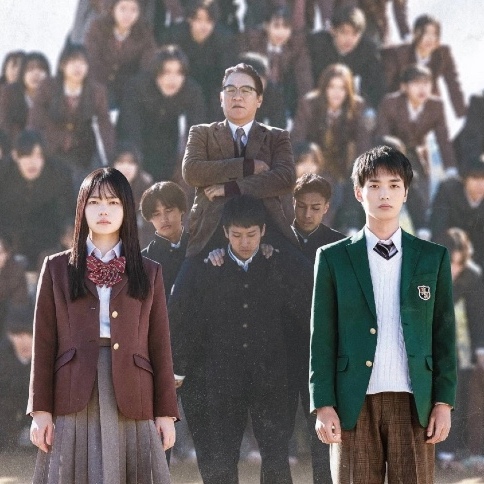
The film initially plays like a fairly traditional animated short or J-drama, following the daily rhythms of high school life. That is, until something very ordinary yet strange happens in the fields behind the school. In a very semi-Ito development, a group of students form a human pyramid, and while their classmates and teachers initially ignore the bizarre sight, the students remain frozen in formation for hours, raising concerns. When the police arrive to investigate, he immediately joins them.
The principal then announces that all students and faculty must join the pyramid, with hundreds of teenagers and adults dutifully lining up. That is, everyone except Ai, Kobayashi, and two other students who are being chased by their classmates.
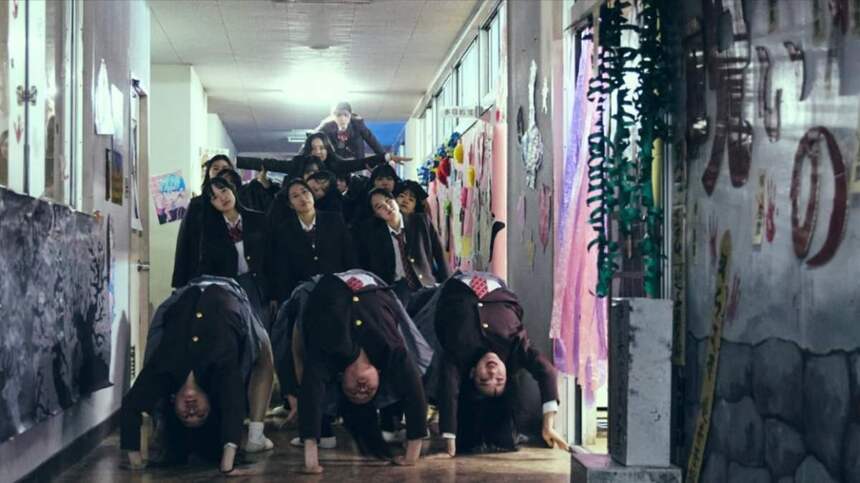
From there, the film takes an already pointed metaphor for conformity and turns it into a surreal nightmare that transforms it into a new flavor of body horror. Along the way, it weaves a young romance between the two leads and a tragic backstory that helps explain the child’s newfound determination to be a leader rather than a follower.
new group‘s obsession with gymnastics and the formations students make with their bodies is an interesting, low-fi but thoroughly unsettling spin on the body horror subgenre. Students will contort and freeze their bodies in a variety of poses and configurations that are purely performative in nature, further leaning into the idea of making themselves into something they are not. These sequences, combined with the performances of Anna Yamada and Yuzu Aoki, really sell not only the eerie beginning, but the larger changes in the film as more and more people join in on this new trend, and the budget remains modest.
I also think the film establishes surprisingly emotional stakes and motivations once it finally uncovers the source of the child’s trauma and her problems with her parents. Refusing to follow the crowd and trying to avoid crazy conformists is one thing, but understanding Ai’s backstory gives her character real depth.
new group It’s a chilling portrait of Japanese society that also functions as a creative and profound take on body horror. Yûta Shimotsu not only presents an interesting metaphor for Japanese society, but also makes some rather dramatic claims about the conformity of Japanese society. It’s something that helps wrap up the Strange Human Pyramid plot threads and romantic entanglements in a way that adds real emotional weight to the final act.
new group Not only could this film be one of the most original and authentic Japanese horror films in years, it’s also one of the weirdest.
The film hits Shudder this Friday, November 6th.

Do you believe this content is inappropriate or violates your rights? Click here to report it or see our DMCA policy.