 Skip to content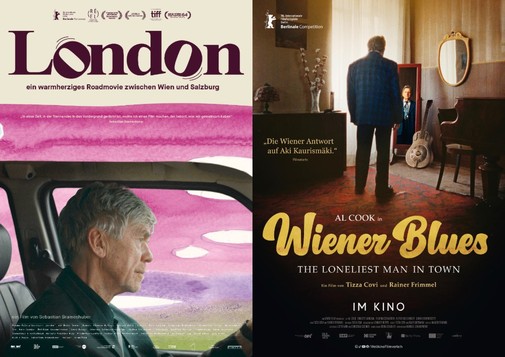
Claudio Alves
When most engagement with film comes from mainstream productions, it’s easy to fall into the mistaken belief that narrative and documentary films are two strictly separate categories. But since the birth of the medium, the boundaries between the two have been blurred and the barriers have become porous and permeable. One might go back to the artificial rendition of Lumières’ shorts, or perhaps again doubt Flaherty’s authenticity. Nanook of the North It is the millionth film to be released since its release in 1922. Perhaps we can think of the cinematic tradition of Portuguese post-revolutionary cinema, or the Iranian auteurs who continued to push boundaries with hybrid works in the 80s, 90s and beyond. Many of the films at the 64th New York Film Festival were caught between the dichotomy of fact and fiction, and two of them did so by using portraits as their cinematic models.
Both are Austrian projects that competed for the Golden Berlin Bear earlier this year – by Sebastian Brameshuber London and by Tizza Covi and Rainer Frimmel. the loneliest man in town…

LondonSebastian Brameshver
The Western Autobahn between Vienna and Salzburg was the first motorway built in Austria, completed in the late ’60s and originating from a Nazi project for the state. For most people who drive a car these days, it has become an unnoticed part of their lives and daily routine. This is also where Sebastian Brameshuber filmed his latest film. LondonIt’s as misleading as the Brazilian character study that won the Queer Lion Award in Venice. In the first scene, a set point that welcomes us into the film, Brameshuber doesn’t allow us to see anything but the road, putting us in the driver’s seat as we peer through the windshield in search of something, someone.
Drivers find people wearing military uniforms and carrying McDonald’s bags in the parking lot. He’s a military conscript, brought here by car through an unnamed app, and wants to talk, share, open himself to the driver, the camera and us. But the conversation flows naturally, without a hint of staged confession, as the young man questions the attire he is currently wearing and the agency that would commit heinous violence. Or so you might be led to believe. He suffers from PTSD. Although at first the disease may not have been named that way in order to express it in such a specific language. Bobby is an active listener who is dedicated to his role as an amateur chauffeur for the needy and underprivileged, helping them when they get lost along the way.
Bobby is Bobby Sommer, the driver and a face some viewers may recognize from Jem Cohen’s film. museum hours Documented from over ten years ago. On the surface, Sommer is not playing the role in the traditional sense, but merely embodies herself as a Marina Abramovic-style conversation facilitator. And these interactions are always filmed the same way. A profile photo of the driver looking from the passenger seat, the opposite direction, and the windshield camera looking at the road. well. Because, let’s face it, filming from a car driving down the Autobahn isn’t the most practical thing to do. This is especially true when the structural premise of the film is to record one-on-one conversations.
So most Londonwas actually filmed in an indoor studio through the magic of rear projection and a casting call, inviting people to share their own biographies in this forged car. Sommer improvised and shared a part of himself, assuming some of the same vulnerable positions he allowed his field partners to embody. But does this setup make the dialogue feel less realistic? As with any story that goes beyond the personal, their essence still rings true to some extent. And somehow we never get unmediated reality from straight documentaries. Because whether we admit it or not, the presence of cameras always distorts the world around us.
You might question the need for fantasy. Especially since after the first sequence it is never revealed and repeated again and again within the film, usually only breaking into interstitial advertisements that catch up to media res and follow Bobby Sommer into his own life or into another part of his fantasy. But it would be a lie to say that it is also acceptable to see someone drinking coffee at a gas station. The man is there, the coffee is there, and the coffee is actually being consumed. It’s true, right? In light of this, the trickery of certain dialogue passages, such as riding with a Romanian woman in a torrential rain when communication is more cut off than usual, can feel like a betrayal. But is it betrayal? Should a movie, or even a docufiction, summarize all its mechanics for us?
What’s more interesting to ponder is what the conversation is about, whether and how it paints a portrait of the socio-economic landscape that comes with a country we keep watching through our car windows. Brameshuber and Dane Komljen’s editing is as sharp as a scalpel ready for surgery, managing the audience’s attention through repetitive cycles that could easily lead to disengagement. This also means heavy curatorial work, raw and rough edges polished to poke at flowing portraits that can sometimes feel too “apolitical” while hinting at a moment of growing militarism and linking much of Austria’s infrastructure to the Third Reich, not to mention the last two passengers Bobby drives into the night. Maybe it’s not enough. Maybe that’s not the ultimate goal of the movement.
In the end, no matter how much you expand London It may feel like a reflection of the open road, but it always comes back to Bobby as a person, as a device, and as a potential avatar for the film itself. avatarA conversation in which filmmaker Ted Fendt defends Cameron’s 2009 blockbuster as a Marxist text from the passenger seat is a fun highlight. Bobby creates conversations that draw people towards him and away from him. What he produces and consumes contains Didi Huberman’s phenomenological theory of how the images we observe view us, Nietzsche’s variation of the abyss, and the comfort of cinematic humanism all in one. if London It will serve as a snapshot of Bobby Sommer and, through him, a self-portrait of the medium himself.

The loneliest man in town, Teja Kobe & Rainer Freemel
Tizza Covi and Rainer Frimmel, who moved from neorealist techniques to the whimsical digressions of a fabulist and then back again, became modern film’s greatest portraitists. While their early work tended to focus on groups, their more recent work turns its attention to individuals, often profiling people for whom performance is a part of their lives. Actually, if you see something you like onion, Mr. Universe And submitted to the Oscars veraWe can note a special interest in people from the private sphere, eccentric characters who play themselves in front of the camera as much as they treat the whole world as an audience and themselves as a theatrical structure.
As the exploration continues, Covi and Frimmel’s film feels much more liberated from the norms of documentary filmmaking, which involve journalism or fact-listing that some people want to see. Instead, they consider the observed truth of the person and make the persona role the center of the project, bending everything else to the illusion of that element. with veraOne of the most tragic Nepo Babies of Italian cinema, we get a glimpse into her life. But she also got the chance to become a star as much as her famous father, Giuliano Gemma, by acting out the plot of a novel written years earlier by Tizza Covi.
Covi and Frimmel do not adapt literature, nor do they satisfy the actor’s desire to delve into cutting-edge topics, but they continue to push the boundaries of what can be considered a documentary. the loneliest man in town. This time, they pointed their cameras at Alois Koch, an Austrian singer who has dedicated his life to celebrating the blues and is obsessed with Elvis and an America that exists only in his imagination. In reality, Koch has never left Austria, but he speaks English with a facsimile of Southern twang and has photos of the great black American singer all over his home and basement studio-cum-mausoleum. Also, for all intents and purposes, his name is Al Cook.
It’s an identity he chose for himself a long time ago, and he remains true to his Hollywood dreams, either personally or through Covi and Frimmel’s cameras. While a first-hand examination of Al Cook would reveal that much of what the film presents is nothing more than the truth, the story constructs a very specific vision of Cook as a man whose narrative was so distorted that his state of existence was almost ghostly. We find him in an apartment building with no other tenants, as if following a ghost that haunts the ruins of his former home. A loneliness that burns brightly in 16mm, responding with the volatility of celluloid to sudden power outages or breakdowns in lights. The image itself seems ready to burn and become a ghost.
The narrative explaining such despondency is simple and may remind readers of Sônia Braga’s stubborn heroine. Aquarius. The reason Cook is lonely is because all of his neighbors have sold their homes, either to new corporate hellholes or to development companies who want to tear them down to build luxury complexes. Essentially, he forced his moneymakers to wait until they died or gave up. And luckily, that fits the singer’s plans. It is not a surrender to the pressures of capital, but an acknowledgment that at the end of his life it will be time to check a few things off his bucket list and finally visit the places he has dreamed of for years.
If Cook is paid to visit the United States before the end of his time on this Earth, the Danube River will no longer replace the Mississippi Delta in his album cover photo shoot. Memphis became a place of pilgrimage. the loneliest man in town It rejects the spiritual undertones that can make a film about faith or religion. Instead of transcendence, Covi and Frimmel often find comedy, delighting in the absurdity of Cook’s Americanized stage persona and the sad fiction of this final tour. Their mise-en-scène is almost Tati-esque in its rigor. More is communicated by how an apartment home changes over time than any conversation. Cook, on the other hand, plays his role with the perfect deadpan of the Kaurismäki protagonist.
watching the loneliest man in townOne might start the game of discovering the reality behind the performance, which is both foolish and a secret source of euphoria. Because there is something very beautiful about the yellowed ivory of an old piano. Because there’s a whimsical juxtaposition between a real dog standing next to a ceramic cat that Cook is trying to sell, and even a genuine sadness that grips the singer as she looks at archival footage of herself, her youth, and loved ones lost to time. Best of all, Covi and Frimmel ceded entire verses to their star, singing the blues with him, his guitar, and his sweet but weary voice, evoking cinematic immortality. I hope his voice will be heard long after he is gone. Let’s hope Al Cook’s personality and artistry will last much longer than the fleeting personality of Alois Koch.
none of them London nor the loneliest man in town There are still US distributors, but hope springs eternal. The latter was part of NYFF’s main slate, and Brameshuber’s film was also screened in TIFF’s Wavelengths program and then screened in the Currents section.