 Skip to content
The horror of the 1970s includes some of the greatest, most iconic movies ever made. The decade is considered a golden age for the genre. The films of this era became cultural reference points that would be quoted, imitated, and parodied ad nauseum for decades. These films announced many of the most respected auteurs to ever work in film, some of whom remained in horror and others who would go onto other genres. At least for the Western canon, it is hard to overstate how influential and impactful this decade was for horror and modern cinema in general.
Below are 30 of the most seminal, respected, and beloved movies of the decade. They comprise a survey of films that continue to inspire. Several spawned franchises. Many have been remade. They remain largely unsurpassed by their imitators, sequels, prequels, requels, reboots, or homages. This century’s horror movements – from torture porn to elevated horror – are indebted to the films below, and even filmmakers work well beyond genre confines celebrate these films for the impact they’ve had. Even at 30, this list is not long enough. An angry, indignant comments section would be a welcome way to flesh it out. If you hate the word ‘iconic’, this list will terrify you.
The 30 best horror movies of the 1970s:
1. The Bird with the Crystal Plumage (1970)

Dario Argento’s debut is an apt place to begin a survey of 1970s horror considering the role Argento, and Italian cinema, would have on the genre. This was Argento’s debut feature, and displayed many of the hallmark flourishes that would make him such a legend of the genre. Giallo movies existed before him, but no director is as synonymous with the genre as he is.
By now, Argento’s plot beats might be familiar, but The Bird with the Crystal Plumage was where he tested the concept. American writer Sam is on holiday in Rome when he stops a woman from being attacked at an art gallery. He’s now an important witness in the hunt for a serial killer, and Sam decides to play detective before he falls victim to the killer. Loosely based on a 1940s pulp novel (reportedly introduced to him by none other than Bernardo Bertolucci), Argento’s directorial career was off and running, and the giallo genre reached a wider audience and received critical acclaim that had eluded the genre before.
2. A Bay of Blood (1971)

Dario Argento’s The Bird with the Crystal Plumage may have been the movie to popularize giallo among mainstream critics and audiences, but Argento’s fellow countryman Mario Bava is credited with making the first film, 1963’s The Girl Who Knew Too Much. One year after Argento’s debut, he’d release Bay of Blood, a movie that repulsed some viewers with its violence but is now thought of as one of the most influential horror movies ever.
The death of a countess sets in motion a chain of murders as different members of the community try to take control of the titular body of water, hence the title. Bava was already an established director of horror films, but A Bay of Blood’s ghoulish misanthropy was jarring to contemporary audiences (including, allegedly, Christopher Lee). Today, the film is regarded as a proto-slasher, one of the films to presage the 80s trend of body count-as-pacing, with several of its shots either inspiring or being lifted wholesale by a generation of schlocky slashers. Despite the outrage, critics couldn’t help but compliment its composition and the audacity of its gore. Today, it’s arguably Bava’s most influential movie.
3. The Devils (1971)
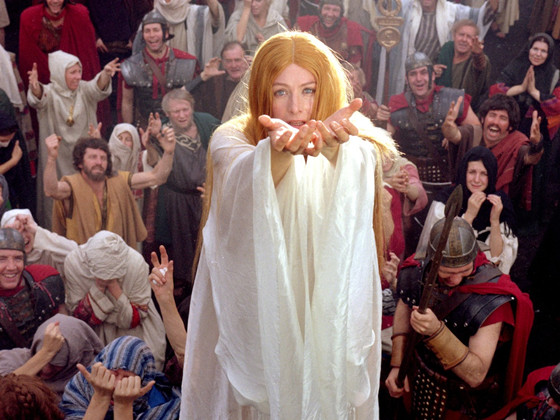
Many of the films on this list are gory, unnerving, and/or disturbing. Several caused outrage, provoked walkouts or protests, or were reviled by audiences. But only one was publicly condemned by the Vatican. Ken Russell’s The Devils is one of the most controversial movies ever made. It’s been heavily censored and was buried by Warner Bros. for decades with various cuts available on home video and streaming. Now in 2026, an official restoration is hitting cinemas preempted in the US by the dreaded NC-17 rating.
The Devils, however, is more than its notoriety. Director Ken Russell came from a theatrical background, and his baroque retelling of witch trials in the 17th century is as revered as it is notorious. It seems odd to believe now, but Hollywood actually came to Russell with the idea. Detractors more than balked at the combination of explicit sex and violence with religious imagery and themes, but The Devils is as much a story about power and the rawest, ugliest aspects of humanity that weaponize faith to terrorize communities. Sharing many of the same themes as the Unholy Trinity or UK triumvirate of folk horror, The Devils approaches the horrors of superstition and panic with sumptuous craft and a telling look at political opportunism in even the most supposedly selfless of arenas.
4. Punishment Park (1971)
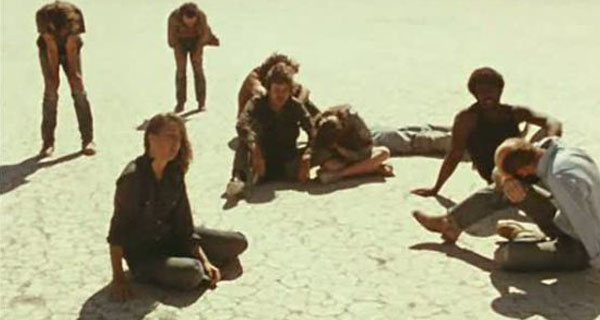
Punishment Park is not often thought of as horror and doesn’t often make it onto lists like these, but Peter Watkins’ pseudo-documentary (mockumentary doesn’t feel like the right word) is jarring, frightening cinema all the more for how realistic and true to life it is.
Punishment Park is set in the 1970s in a near future where the Cold War has gotten quite hot. The United States routinely rounds up dissidents, puts them before tribunals, and gives those convicted (ie all of them), the choice between harsh prison sentences or a chance to survive the titular attraction while hunted by police and the National Guard for three days. The premise has long been mined for genre thrills, but its Watkins approach – not just the naturalism of the filmmaking but the honesty of the storytelling – that makes Punishment Park so disturbing. This might be an alternate reality United States, but the realities it captures remain frightening to this day.
5. Asylum (1972)
The 1970s was a golden age of modern horror, especially so for the horror anthology. The gothic settings, twisty stories, and campy tones still resonate today. While there are many delights from the decade – The House That Dripped Blood, The Vault of Horror, From Beyond the Grave, The Uncanny – often featuring Peter Cushing and/or Christoper Lee, this list spotlights two from 1972. The first is Asylum, directed by Roy Ward Baker for Amicus Productions, a British company that was known for its portmanteau films and largely perfected the model.
Asylum’s premise alone has become a foundational sort of trope. Dr. Martin arrives to take up his new position at a remote asylum. The warden insists that cosmopolitan doctors don’t understand mental illness and their attempts to help patients like his are naïve. Case in point: the last warden was driven insane and is now an inmate. Dr. Martin is invited to interview the patients and deduce which of them is the previous warden. Anthology films are notoriously a mixed bag and Asylum has its schlock, but it benefits from the cohesion of having one writer (Robert Bloch of Psycho fame) and a wicked sense of humor that made this one of Amicus’ most enduring productions.
6. The Last House on the Left (1972)

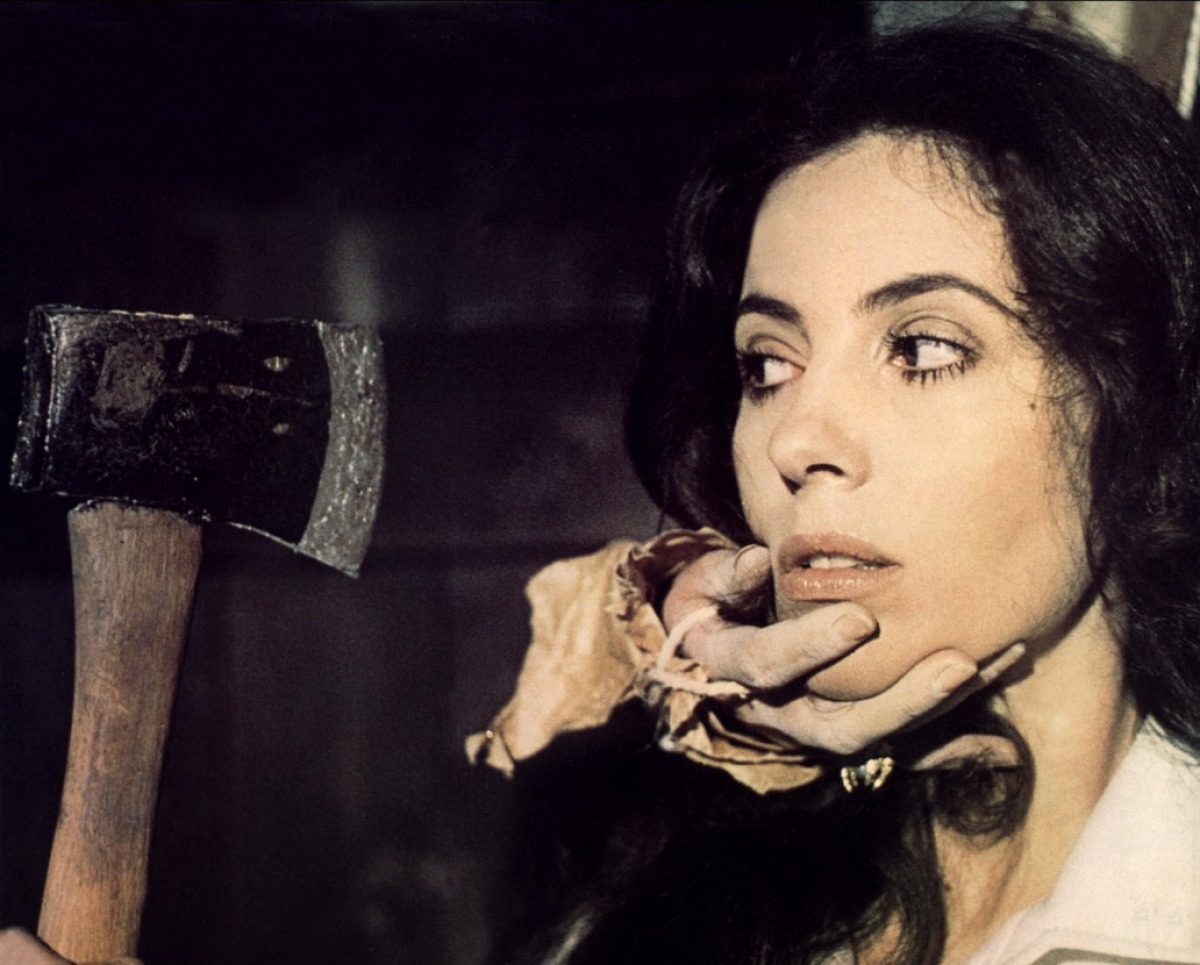
For his directorial debut, Wes Craven remade Ingmar Bergman’s The Virgin Spring stripped of any of the original’s spiritualism or magical realism and replaced with grindhouse aesthetics. The Last House on the Left remains a disturbing crime and revenge film that forgoes the stylistic approaches Craven would bring to his later fare. It continues to unnerve for its graphic depictions of assault and the way it used a counter-culture cautionary tale as an onramp for truly gruesome storytelling.
Mari and Phyllis are teenagers going to a concert who come across a gang of sadistic criminals. The violence and degradation they’re subjected to remains controversial to this day, and The Last House on the Left functions as a diptych: one part hopelessness and one part unrelenting revenge. Craven’s film invited audiences to gasp at violence before reveling in it. It was a notoriously independent shoot sans permits or much of a budget, with a cast of inexperienced actors who’ve since recounted being frightened and upset during filming. The result, for better or worse, is onscreen and in horror lore. Craven would direct another enduring 70s horror, The Hills Have Eyes, before becoming one of the biggest names in horror during the 1980s.
7. Tales from the Crypt (1972)

As mentioned above, this decade had made anthology horror movies that charmed audiences and endure in the hearts of many, often through parodies on animated comedy shows. But none of them went on to become a beloved staple of horror television or featured a wraparound device as elegantly macabre as the Crypt Keeper.
Legendary cinematographer Freddie Francis worked as a director for two decades, often on low-budget fare as well as bouncing between Hammer and Amicus productions. As far as anthologies go, this one had enough tropes to power decades of horror. There’s a Monkey’s Paw tale a la Obsession, murderous spouses, revenge tales from beyond the grave, and moralizing ironies that encourage audiences to savor the worst of humanity getting their comeuppance. Based on various EC comics, it’s hammy horror fun that’s since become a template for ghastly pleasure.
8. Don’t Look Now (1973)
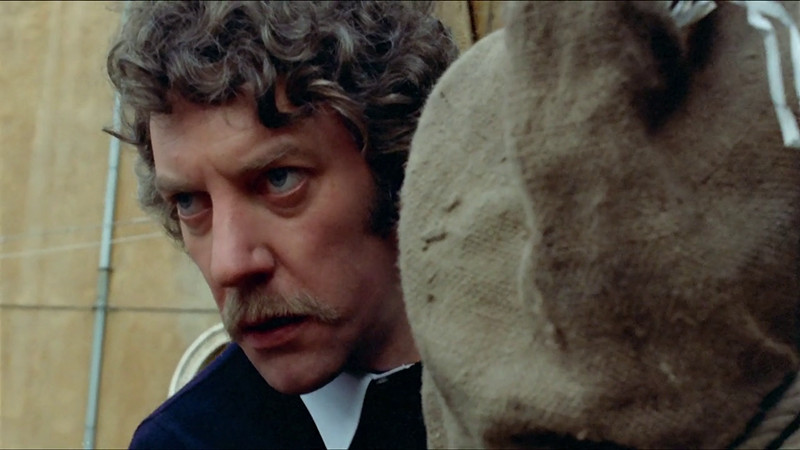
Giallo had broken through, realism was creaking into a famously heightened genre, and Don’t Look Now lurked onto screens. The films thus far are seminal horror classics, but Don’t Look Now might be the first of the bunch that’s roundly considered one of the greatest films ever, genre be damned. From its surprisingly nuanced depiction of grief to its sex scenes that spurred decades of gossip and the notorious twist ending, Don’t Look Now is iconic horror in a year full of it.
Donald Sutherland and Julie Christie are married couple John and Laura. They’re still mourning the death of their child when John takes a job in Venice. Unstable and emotionally fragile, the couple are beset by strange occurrences and sightings of a mysterious figure in red. Don’t Look Now’s ending was one of the era’s great shockers while its slower, elliptical pace, fragmented editing, and artful lensing marked a departure from the tone of last decade’s horror fare. Its thematic focus on grief and communication would inspire generations of future filmmakers and especially the horror of the 2010s.
9. The Exorcist (1973)
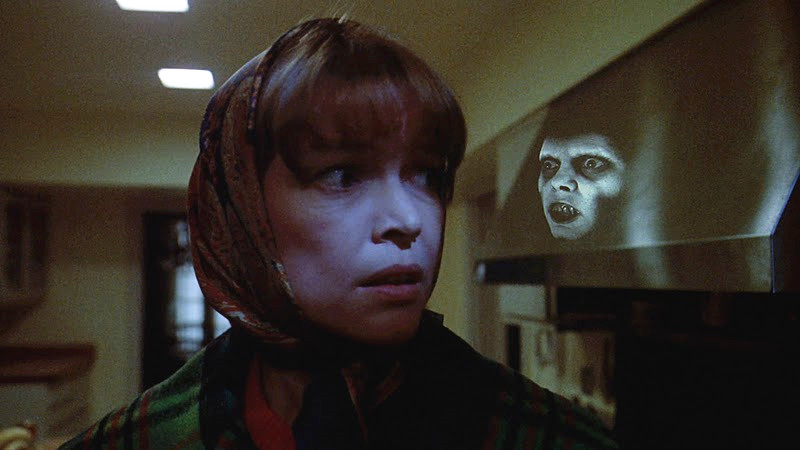
William Friedkin’s classic has become so iconic that it’s hard to believe that it could hold up today. The poster, the shadows, the demon, the pea soup, the crucifix – so much of The Exorcist has been consumed and regurgitated by other, lesser media that those watching TV in the 1980s-2000s essentially saw the movie even if they never sat down and actually watched it. At least a handful of exorcism movies come out every year, and none of them get close to The Exorcist, either in quality of cultural footprint.
To say that Friedkin’s film has never been topped isn’t hyperbole. The first sequel was so notoriously bad that there’s a documentary about it. It had the inverse effect of the first movie. Rather than critical praise, Oscar nominations (best picture) and wins (best adapted screenplay) and lines around the corner, even in winter, it was mercilessly mocked. The third, directed by original novelist William Peter Blatty, has become a cult favorite (with one famously scary scene) that’s an unrelated serial killer story with an exorcism tacked on. The fourth film, a prequel, was made twice because the studio was so unhappy, and a recent 2023 legacy sequel ignoring all the others failed to hit the right mark.
They’re united by a lack of independent vision, studio meddling, and an attempt to recapture a mood as opposed to setting one. Friedkin told the right story at the right time in the right way. The level of craft, care to the material, and a studio system open to different, more nuanced approaches to horror converged to make one of the most beloved horror films of all time.
10. Ganja & Hess (1973)

Of the four films released on this list released in 1973, three of them were instantly successful. Bill Gunn’s Ganja & Hess, unfortunately, took more time to be appreciated. Another example of classic horror coming from constraints forced on it by a low budget, Gunn’s film was unconventional and experimental, making for a dreamlike immersive experience.
Ganja & Hess has as its lead Duane Jones, and Jones’ horror footprint is considerable given he only served as the lead in two pictures: this one and an unassuming picture from 1968 called Night of the Living Dead. Given the chance to direct a “black vampire movie”, Gunn used vampirism as a metaphor for addiction, taking his picture all the way to Cannes. While reviews were positive, the box office wasn’t, and Gunn’s version was cut down by the producers and disowned by Gunn. A testament to its arty approach, when it finally got a remake, it was an equally arty interpretation from Spike Lee. But as befits a film like this – thoughtful, nuanced, and strange – it’s gone from butchered vision to cult classic to part of the Library of Congress’ National Film Registry in recognition of its artistic merit and cultural importance.