 Skip to content
 My final dispatch from Busan included the most diverse selection of titles at the festival. They are all from the Vision Section. The first is in the Asian vertical and the last two are in Korean. There are also characters who make the most of the cowardly economic system that pushed them to the margins and find their way back to a comfortable center. These films are all female-led and built on a precise visual language that fits perfectly with their serious themes.
Set at the beginning of the COVID-19 pandemic in Mongolia, ‘foot surgery”, which means ‘station’, is a romantic comedy with dark and prickly political issues that finds truth in a broad visual approach.
Written and directed by Byamba Sakhya, the film follows the story of Khanda (Bulgan Chuluunbat), a dim-witted single mother who manages a remote gas station while raising her teenage daughter. In this small provincial town, Kanda almost welcomes conflict. First of all, everyone is in debt to her because she borrowed the gas on credit. A shaggy villain attempts to pay her for a sheep, which she bitterly refuses. Khanda also taunts a skilled coach who tries to get his daughter involved in a martial arts competition in the city, and is understandably and openly antipathetic to his boss (Tumurbaatar Tsegmid), who tricks her into sexually pleasing him.
As a result, when the plague arrives in her village in the form of free-spirited tanker driver Sumber (Tsolmon Damdindorj), she appears relatively unfazed. Her life couldn’t get any worse, right? In fact, Sumber’s arrival begins to make Khanda’s life much better when a contact tracing alert involving Khanda forces authorities to quarantine at a gas station. They taped off the station and cut off fuel supplies and Khanda’s only source of income. This situation brings her into direct contact with Sumber, who immediately becomes smitten with her, and soon after, she falls for him.
The film, which won four awards in Busan, including the top prize in the vision category, cynically takes aim at what the pandemic has wrought and criticizes how corrupt officials have wielded fear to gain more power. The pulsating score sonically expresses the rapidly spreading panic surrounding the town, while the gorgeous, wide panoramic framing that captures the secluded hills surrounding the town also symbolizes the lack of community that exists during this emergency. A cinematographer by profession, Sakhya flips some of his most majestic images to deliver a bruising comedy that mocks the misfortunes of officials facing the virus.
There is only one hope in this empty landscape. Kanda and Sumber’s growing relationship. This relationship begins with lyrics and song dedications and then morphs into something more existential and meaningful. Chulun Bat is especially fascinating. She always wears a shy smile and, like ‘foot art’, allows her to walk through this insensitive world while maintaining her personality.
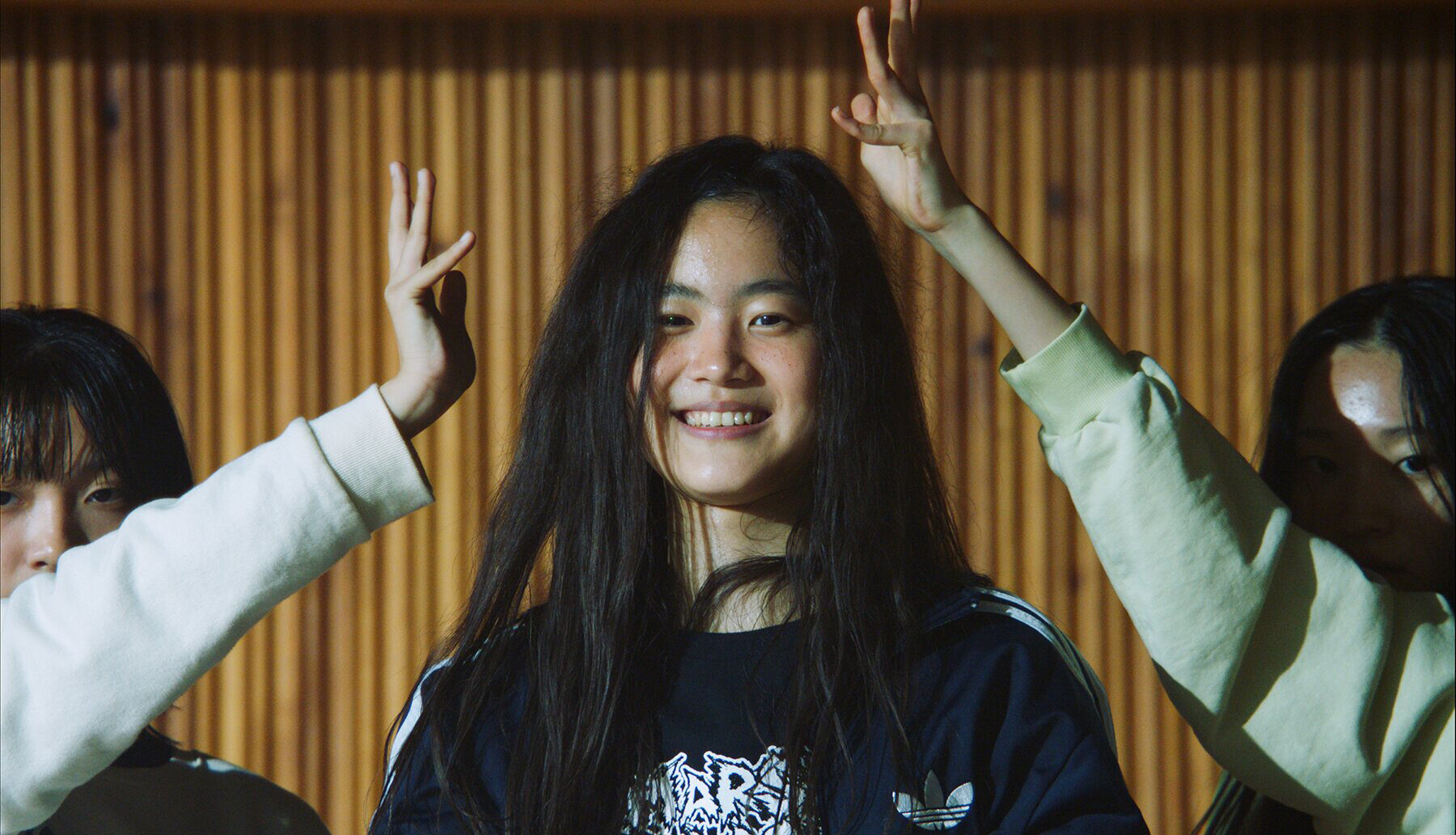
In Jeong Ji-hye’s opening scene, “full moon,” 16-year-old Hye-mi (Jeong Min-ju) practices her dance moves and lip-sync with her four friends for the upcoming Daeboreum festival. Hye-mi literally doesn’t fit in among them – too tall in one place and too distracting in another. She’s also quirky. Despite this, she desperately wants to be center stage. But her anger causes her to fall out with her group, including her best friend, and she suffers a wardrobe malfunction after the performance. It culminates in tears and screams.
As the head of the household to her father (Kang Min-hwi), who has Down syndrome, and her intellectually disabled mother (Kim Geum-soon), Hye-mi bears too much responsibility for her teenagers. Teenage girls are often embarrassed by them. In fact, she hides them from her friends. But she doesn’t love them any less. She is actually incredibly protective of them. When a new YouTube influencer neighbor lines up Hye-mi’s mother to feature on his channel, Hye-mi reacts mockingly. When should Hye-mi accept that her parents have autonomy? Who is she to protect them from activities they might enjoy?
In this somewhat puzzling coming-of-age story, Jeong does not immediately answer these questions. Instead, she uses Hye-mi’s newfound friendship as she hangs out at a stargazing club with her neighbor’s devoted daughter (Kim Tae-yeon) to explore the difficult personal growth Hye-mi must embrace in order to be accepted. The film also finds additional resonance by depicting the school life of Hye-mi, who has a crush on a guitarist, and the performance of a talented band.
Jeong’s stern performance gives Hye-mi a kind of emotional specificity, one that acknowledges the complexity of an adult-minded girl who would much prefer to be a normal teenager. Even when the film spreads itself too wide for its own good (completely unable to reconcile the many character-based trajectories it traverses), Jung’s presence is palpable. <보름달>It maintains balance and seriousness.
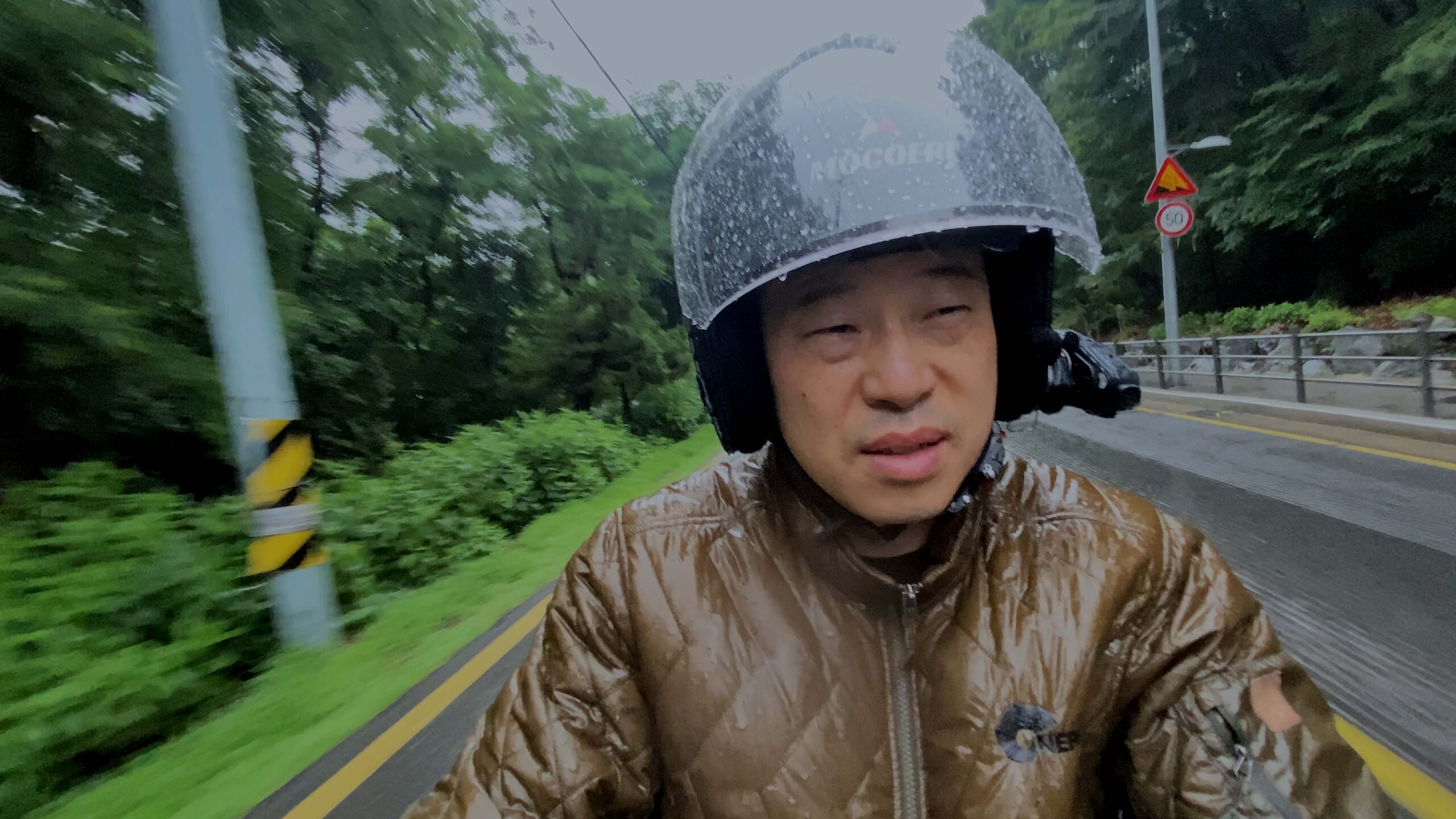
Park Song-yeol’s honest social realist drama “beyond the horizon of love” is an all-too-familiar modern-day story of how many people live on the brink of economic disaster. In it, Taeyoung (Park Song-yeol) and Joo-mi (Won Hyang-ra) appear anxious due to their recent business failure. Defeat quickly turns to joy when the husband and wife discover that they are pregnant. Taeyoung’s life-changing events are magnified through a time-lapse from Joo-mi’s pregnancy to the birth of their son. Food Delivery.
The job is an unstable one. Taeyoung drives a used motorcycle that breaks down often. He also nearly got into several car accidents, which can sometimes be seen on his immersive helmet cam. On his first delivery, he has to drive back to the customer who received the wrong order. But his most serious mistake occurs when he leaves the kickstand on his moped in his haste to complete his daily challenge. The vehicle rolls and strikes the back of a man’s car. The owner asks Taeyoung for 1 million won in compensation, but Taeyoung is afraid that he doesn’t have the money.
Song Yeol’s film carefully explains the various ways in which these economic weights drive a wedge between once tightly bonded husbands and wives. Taeyoung comes home later and later, and Joo-mi takes care of her crying son for a long time. Song Yeol uses grayscale photography in the night scenes to show the difficulties of interpersonal relationships more clearly. Taeyoung and Joo-mi also have nightmares. In particular, Taeyoung dreams of the car owner coming to him and asking for money.
Taeyoung and Joo-mi try to make more money in their own ways. For Jumi, this started with starting her mom vlog. This activity is one that gives her spontaneity in her reclusive life. That being said, we rarely see her outside of her apartment. Taeyoung, on the other hand, uses similar tactics that the car owner uses against other couriers. It’s a painful moment that symbolizes the vicious cycle that even the kindest people can be forced into when they feel desperate.
The lo-fi aesthetic of Song Yeol’s films, which often rely on natural light, gives this marriage a vivid quality. While Song Yeol delivers a productive and restrained performance, Hyang Ra, who won the festival’s best acting award, plays the role of an exhausted mother and attempts a devastating transformation that borders on a fugue. She creates a rich inner life for a woman who never appears in smaller films. She gives “Beyond the Horizon of Love” an incisive feel, giving this extraordinary humanistic gem a glimmer of hope.