 Skip to content
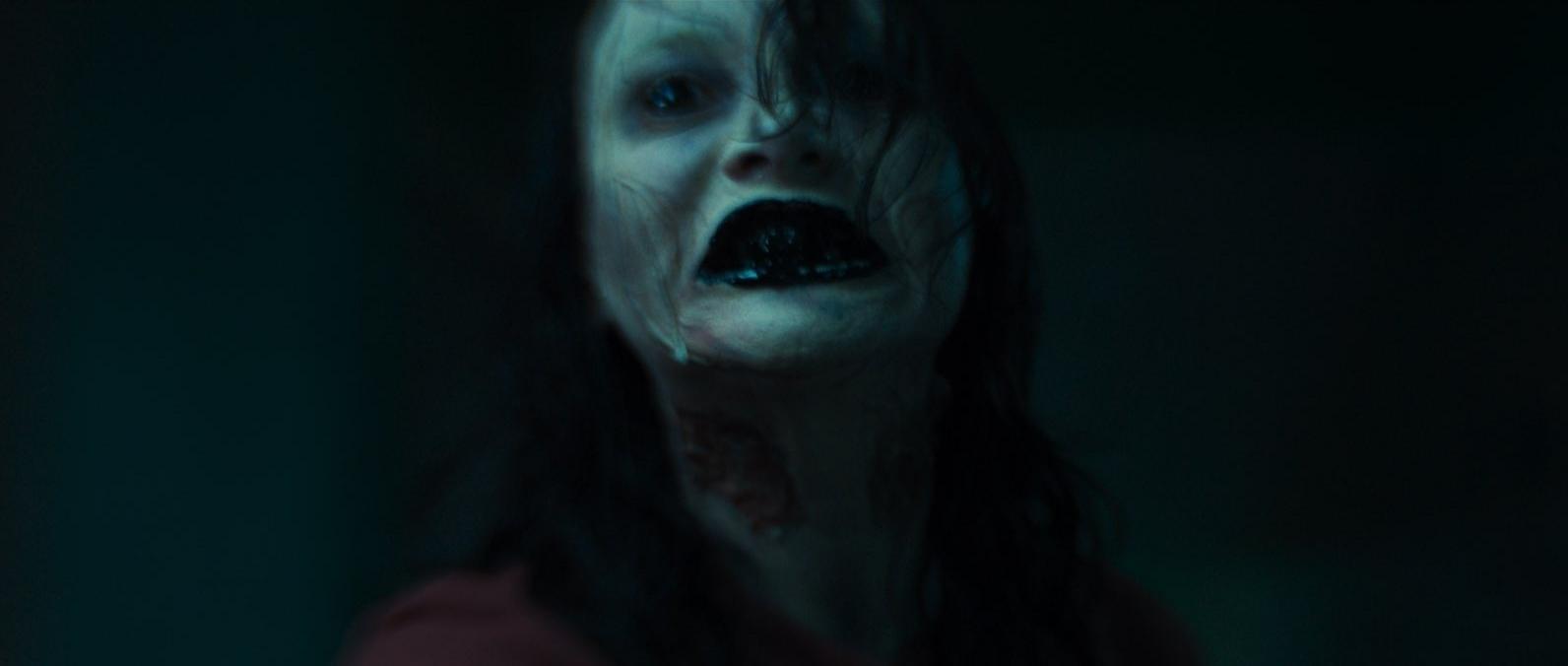
Project Sacrifice (2026) also known as Tumbal Proyek, begins with a disturbing secret buried beneath a bridge under construction. Workers are dying, people are disappearing, and the company responsible for the project seems strangely unwilling to investigate. At first, it looks like a supernatural horror story about a cursed construction site. But as the truth comes out, the film becomes something much uglier: a story about greed, revenge, and the way people slowly become the very thing they once hated.
At the center of the story is Yuda, a young man who joins the construction company Suraya to uncover what happened to his father, Bio, who disappeared five years earlier. His investigation leads him to a series of human sacrifices performed to appease an evil sea goddess. Yet the closer Yuda gets to the truth, the more his own anger begins to shape his decisions. He wants justice for his family, but he also wants someone to pay. That distinction becomes crucial in the final act. By the time Yuda discovers who killed his father, he is no longer simply trying to expose a crime. He is being pulled into the same cycle of violence that destroyed his family in the first place.
Spoilers Ahead
Project Sacrifice (2026) Plot Summary & Movie Synopsis:
What happened to Bio at the beginning of Project Sacrifice?
The film opens at a construction workers’ apartment complex owned by Suraya, a company building a massive bridge intended to connect two important cities. Two workers, Bio and Rudy, are worried because several people have died in mysterious workplace accidents. Their concern is justified, but they have no idea how deeply the company is involved in what is happening. Security guards soon arrive and take Bio to the construction site. There, a shaman named Tarmo performs a disturbing ritual alongside company officials. Another worker is dismembered and offered as a human sacrifice, and his remains are placed inside a bridge pillar before concrete is poured over them. Other bodies are already buried in the structure.
The scene establishes the film’s central horror. The bridge is not merely being built on dangerous land. Its foundations are being constructed with human lives. The film then introduces Bio’s wife, Martha, and their children, Yuda and Laras. When Bio fails to return home, their neighbour Hero tells the family that he has died in an accident at sea and that his body was never recovered. Martha suffers a stroke after hearing the news, leaving her unable to walk independently. For the family, Bio’s disappearance becomes a tragedy without closure. For Suraya, it is a secret that must remain buried.
Five years later, Yuda joins the company as a project supervisor. His decision has a purpose: he wants to discover what really happened to his father. He has spent years researching missing workers and has found a disturbing pattern. Fourteen employees have disappeared, their deaths have been explained away as accidents, and their bodies have never been returned to their families. Yuda suspects that Bio was among the workers sacrificed during the construction of the bridge’s foundation. What begins as a search for one missing father soon becomes an attempt to uncover a much larger crime.
Why does Yuda move into Suraya’s workers’ apartment?
Yuda initially wants to keep Laras and Martha away from the construction site. He knows that the company may be hiding something dangerous, and he does not want his family caught in the middle of his investigation. Laras, however, insists on joining him, partly because she wants to help her brother and partly because she has her own reasons to seek answers about their father. Their new apartment quickly becomes another source of fear. The building’s security guard, Yanto, tells them that nobody is allowed to leave their apartment after 10 p.m. One apartment has been barricaded from the outside, and Martha reacts strangely when they pass it. Once inside their own home, the family briefly sees a mysterious figure that disappears as soon as the lights come on.
These incidents suggest that the danger extends beyond the construction site. Suraya’s workers are living in a place where something is deeply wrong, and the company’s strict rules make it difficult for anyone to investigate freely. Yuda’s research also reveals that the disappearances are connected to New Year’s Eve. The missing workers seem to have vanished around the time of a secret ritual, while reports of missing children and other adults continue to emerge from the surrounding area.

At the bridge, Yuda notices another unexplained problem. The cables develop dangerously high tension, only for the readings to return to normal moments later. His fellow supervisors, Eddie and Sutomo, are more concerned about meeting the deadline than understanding what is happening. They have already encountered inexplicable problems with the bridge pillars, yet they continue construction without proper investigation. For Yuda, these irregularities strengthen the connection between the project and the disappearances. For the company, they are obstacles to be managed, regardless of the human cost.
What does Laras discover inside the apartment building?
Laras begins experiencing supernatural events of her own. While praying at the office, she hears a child’s voice joining her. Later, when she enters the company archive to retrieve a file, she discovers records of the workers. Bio’s name has been highlighted, and she secretly takes the file with her. Before she can leave, she encounters a horribly deformed figure. Her escape takes her through a series of frightening incidents, including a workplace accident in which another employee is crushed by falling steel. The construction site is becoming increasingly dangerous, but the more unsettling discovery comes after Laras returns to the apartment complex and learns that Martha is missing.
Laras enters the previously barricaded apartment while searching for her mother. Inside, she finds ritual objects and a map of the bridge project. A nail pierces her back, and she later encounters what appears to be Martha near the garbage disposal room. The figure turns out to be an evil spirit wearing her mother’s appearance. The sequence is important because the film repeatedly blurs the line between what the characters see and what is actually happening. Laras cannot trust familiar faces, even when they belong to the people she loves.
She eventually encounters several shrouded corpses resembling pocong, the spirits of the dead in Indonesian folklore. When she sees what appears to be Yuda’s head separating unnaturally from his body, she panics and falls down the stairs. The real Yuda finds her and helps her recover. CCTV footage finally reveals that Martha has somehow reached the rooftop, where she is standing near the edge and preparing to jump. Despite her physical disability, she is walking on her own. Yuda manages to reach her in time, but Martha keeps talking about children who have been tied up and harmed.
Her words alarm Eddie, who seems to know more than he is willing to admit. Meanwhile, Laras shows Wati, a company employee whose husband also died at the construction site, the file containing Bio’s name. Wati discovers that her husband’s name is highlighted too. The two families are connected by the same secret. Their loved ones did not simply die in workplace accidents. They were selected for something far more sinister.
Why does Suraya sacrifice workers and children?
As New Year’s Eve approaches, the company prepares another sea-offering ceremony. Wati believes the ritual is a cover for human sacrifice, and Yuda decides to stay behind to observe what happens. He sees Tarmo bring a young girl into the administrative office, while Laras remembers hearing children’s voices coming from its basement. The siblings and Wati investigate the building and discover a room containing the missing children. They also find Tarmo and several senior company officials preparing for a sacrifice. Yuda secretly records the scene, hoping to obtain the evidence needed to expose Suraya.
The rescue takes a devastating turn when Wati discovers that her missing daughter, Inan, is the girl brought in by Tarmo. Before Wati can reach her, Tarmo slashes the child’s throat. Inan dies, and the attempted rescue prevents the ritual from being completed. Tarmo explains the reason behind the sacrifices. According to him, an evil sea goddess inhabits the waters where the bridge is being built. She rejects ordinary offerings and demands human lives in exchange for allowing construction to continue. This belief explains why the company keeps resorting to murder whenever the project encounters trouble. The rituals have become part of its construction process, and the people running Suraya have accepted the deaths as the price of finishing the bridge.
But Tarmo’s explanation does not excuse the company’s actions. Sutomo and the other officials have chosen to preserve their project and profits by sacrificing innocent people. Their fear of the goddess has become another way to justify their cruelty. The horror becomes even more personal when Eddie reveals that Bio was his stepbrother. Bio had secretly married another woman, whom Eddie loved. Their complicated relationship had already created resentment, but Yuda still does not know the full extent of the betrayal. When Wati loses Inan, her grief becomes unbearable, and she takes her own life. Soon afterwards, the sea goddess possesses Martha, and the apartment building descends into violence. Workers become possessed and attack one another as the spirit responds to the failed sacrifice.
The people who have been living under Suraya’s control are now trapped in the consequences of its actions. Their deaths are no longer isolated accidents. The company’s attempt to control the supernatural force has unleashed a massacre. Laras and Yuda join the surviving residents in prayer, eventually forcing the spirit out of Martha. Yet Tarmo warns that disrupting the ritual will only lead to more demands for sacrifices. Instead of accepting responsibility, he orders Eddie to conceal the incident from the media. Yuda has uncovered evidence of the company’s crimes, but he is also learning how easily anger can take over a person’s judgment. His investigation is no longer just about finding the truth. It is about deciding what he will do once he knows it.
Why does Yuda turn against the company and his own family?

Yuda eventually discovers a recording hidden inside his father’s former apartment. The footage reveals the truth he has been searching for: Eddie was the one who killed Bio and offered him as a sacrifice. It also confirms that Suraya intends to continue the rituals every New Year’s Eve until the bridge is finished. Yet the discovery does not bring Yuda peace. He learns that his mother already knew about Bio’s second marriage but concealed it to protect her children from hating their father. Yuda now feels betrayed by both parents. His grief turns into anger, and he begins to see revenge as the only way to settle the past.
Sutomo recognises this anger and uses it to his advantage. He tells Yuda that the bridge needs only seven more sacrifices before construction can be completed. Yuda agrees to take part, believing he can use the ritual to punish the people responsible for Bio’s death. This is the moment when Yuda’s investigation changes into something far more dangerous. He entered Suraya to expose its crimes, but he now accepts the same logic that allowed those crimes to happen.
Project Sacrifice (2026) Movie Ending Explained:
Why does Yuda kill Martha in the ending?
During the final ritual, Yuda uses a bulldozer to kill six people, including Eddie, Rudy and several contractors. He then prepares to sacrifice Sutomo as the seventh victim. At the same time, Martha is possessed by a spirit and leaves the apartment building. She reaches the construction site just as Yuda begins crushing Sutomo beneath the bulldozer. Unable to see clearly beneath the machine, Yuda continues operating it, unknowingly killing his own mother alongside Sutomo.
When he realises what he has done, the consequences of his revenge become impossible to ignore. He wanted to punish those who destroyed his family, but his own rage has now destroyed what remained of it. Tarmo offers an explanation for Martha’s possession. According to him, the spirit was not the sea goddess but Bio’s vengeful ghost, trying to stop the sacrifice and prevent the bridge from being completed. The spirits of the earlier victims, including the fourteen missing workers, have also become vengeful souls.
The company places Martha’s body with the other victims inside the bridge’s unfinished section and covers them with concrete. After 22 human sacrifices, the bridge is completed. The physical structure stands as a monument to the lives sacrificed for it. People will eventually cross the bridge without knowing what lies beneath their feet. Years later, Yuda has become Suraya’s chief project manager. He receives credit and financial rewards for completing the bridge, while the disappearances and murders remain concealed. He appears to have accepted his new position without showing much regret.
This is perhaps the film’s most disturbing twist. Yuda began as someone determined to expose corruption and seek justice for his father. By the end, he has become part of the same system he once wanted to destroy. His anger gave him a reason to participate, but greed and personal gain allow him to live with the consequences. Laras, meanwhile, works as his assistant. She has not forgotten their mother’s death or what happened at the construction site. In the final scene, she brings Yuda paperwork for another project. He signs the document, apparently unaware of the resentment she still carries.
Laras responds with a subtle, unsettling smile. It suggests that she may be considering revenge against her brother, potentially continuing the cycle of sacrifice and betrayal. The ending leaves this possibility unresolved, but its meaning is clear. The real curse in Project Sacrifice is the cycle of greed and revenge that turns victims into perpetrators. The supernatural goddess demands human lives, yet the people who keep feeding her are driven by ambition, fear and personal grudges. Yuda’s tragedy is that he gets the truth he wanted but loses himself in the process. And as Laras watches him sign the next project, the film suggests that the bridge may be finished, but the cycle of violence is far from over.